
x
 Send Inquiry
 Send Inquiry
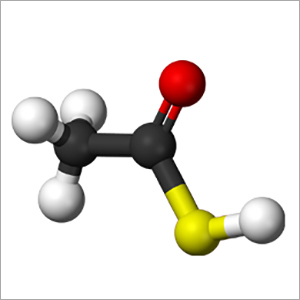
Thioacetic Acid (TAA)
1 INR/Kilograms
Product Details:
- Ingredients Thioacetic Acid (CH3COSH)
- Storage Store in tightly closed containers, in a cool, dry, and well-ventilated place, away from light and moisture
- Solubility Soluble in water, ethanol, and ether
- Poisonous YES
- Physical Form Liquid
- Usage For laboratory and industrial synthesis; use as directed by SDS guidelines
- CAS No 507-09-5
- Click to View more
X
Thioacetic Acid (TAA) Price And Quantity
- 1 INR/Kilograms
- 1 Kilograms
Thioacetic Acid (TAA) Product Specifications
- 208-066-4
- 1.07 Gram per cubic centimeter(g/cm3)
- Pungent, unpleasant, thiol-like odor
- Colorless to pale yellow liquid with a strong, pungent odor; decomposes on heating; corrosive; sensitive to air and moisture
- Reagent Grade/Technical Grade
- 76.12 g/mol
- Acidic
- -43 C
- Clear to pale yellow liquid
- 29309099
- CH3COSH
- 97%
- Liquid form
- Organic Acid
- 12 months (under proper storage conditions)
- C2H4OS
- Intermediate in organic synthesis; used in pharmaceuticals, agrochemicals, and as a reagent in chemical research
- n20/D 1.509
- Not determined / Not for taste application
- For laboratory and industrial synthesis; use as directed by SDS guidelines
- Liquid
- 507-09-5
- Thioacetic Acid (CH3COSH)
- Soluble in water, ethanol, and ether
- YES
- Store in tightly closed containers, in a cool, dry, and well-ventilated place, away from light and moisture
Thioacetic Acid (TAA) Trade Information
- 25 Kilograms Per Week
- 3-4 Week
Product Description
Thioacetic Acid (TAA)
| Testing Item | Standard | Testing result |
|---|---|---|
| Visual appearance | Colourless to Light Yellow Liquid | Colourless to Light Yellow Liquid |
| Main content, w/% | 98% | 99.28 |
Applications of Thioacetic Acid (TAA)
- TAA is mainly used as raw material in fine chemistry and polymer application. The TAA is the only available thioacid used for the preparation of thioesters or mer cap tans.
- These thinoesters and mercaptans obtained from TAA are widly used for the preparation of drugs, pesticides, fragrance and flavors, metal cleaners and metal scavengers, lachrymator material and tyres additives
Applications and Usage
Thioacetic Acid is primarily utilized as an intermediate in organic chemistry, particularly in the synthesis of pharmaceuticals, agrochemicals, and specialized reagents. Its high purity ( 97%) ensures reliable outcomes in laboratory and industrial synthesis. Adherence to SDS guidelines is essential when using this compound due to its toxicity. The substances reactivity and solubility make it highly valuable in various chemical research and synthetic processes.
Safe Handling and Storage
TAA is classified under Hazard Class 6.1 (toxic substances) and must be managed with great care. It should be stored in tightly closed containers, placed in cool, dry, and well-ventilated locations, away from light, moisture, and incompatible substances such as strong oxidizers or bases. Appropriate personal protective equipment including gloves, goggles, and clothing is mandatory while handling to prevent exposure. In case of any accident, immediate medical consultation is required.
FAQs of Thioacetic Acid (TAA):
Q: How should Thioacetic Acid (TAA) be safely stored and handled?
A: Thioacetic Acid must be stored in tightly closed containers, in a cool, dry, and well-ventilated area, away from incompatible substances like strong oxidizers and bases. Avoid exposure to air and moisture. Always use suitable protective clothing, gloves, and eye/face protection when handling this chemical, as it is toxic by inhalation, contact, and ingestion.Q: What are the main applications and benefits of using Thioacetic Acid?
A: TAA is widely valued as an intermediate in the synthesis of pharmaceuticals, agrochemicals, and other organic compounds. Its high reactivity and solubility in common solvents make it beneficial for various laboratory reactions and research, enabling the efficient formation of specific chemical structures in organic synthesis.Q: When is it necessary to seek medical help if exposed to Thioacetic Acid?
A: Medical assistance should be sought immediately if TAA comes into contact with skin, eyes, or is inhaled or ingested. Promptly rinse affected areas with water and remove contaminated clothing. Due to its toxic and corrosive nature, professional medical attention is crucial even with minimal exposure.Q: Where can Thioacetic Acid be used and what industries commonly require it?
A: Thioacetic Acid is utilized in laboratories, pharmaceutical and agrochemical industries, and research institutions. It serves as a key reagent and intermediate in the development of active ingredients and synthesized compounds for a variety of applications.Q: What are the procedures for transporting Thioacetic Acid safely?
A: Transport of Thioacetic Acid requires proper labeling and adherence to international regulations (such as UN Number 2810, Packing Group III). It must be handled as a toxic substance and packaged carefully to avoid leaks and exposure, ensuring compliance with all relevant guidelines and risk statements.Q: What steps should be taken in case of accidental spillage of Thioacetic Acid?
A: Evacuate the area and ventilate it. Use appropriate personal protective equipment. Spills should be absorbed with inert material and placed in a chemical waste container. The affected area should be thoroughly cleaned, ensuring all potential sources of ignition are avoided due to flammability concerns.Tell us about your requirement

Price:
Quantity
Select Unit
- 50
- 100
- 200
- 250
- 500
- 1000+
Additional detail
Mobile number
Email

Other Products in 'Speciality Chemical' category

SHILPA CHEMSPEC INTERNATIONAL PRIVATE LIMITED
GST : 27AAJCS5687F1ZU
GST : 27AAJCS5687F1ZU
Contact
- 316/317, Parekh Market, 3rd Floor 39, Jss Road, Near Kennedy Bridge, Opera House,Mumbai - 400004, Maharashtra, India
- Phone : 08045479650
- Mr. Divyesh (Director)
- Mobile : 08045479650
- Mr Mehul Sanghvi (Director-Business Development)
- Mobile : 08045479650
-
 Send Inquiry
 Send Inquiry
 Send SMS
 |
SHILPA CHEMSPEC INTERNATIONAL PRIVATE LIMITED
All Rights Reserved.(Terms of Use) Developed and Managed by Infocom Network Private Limited. |
